 (Image source: BAG)
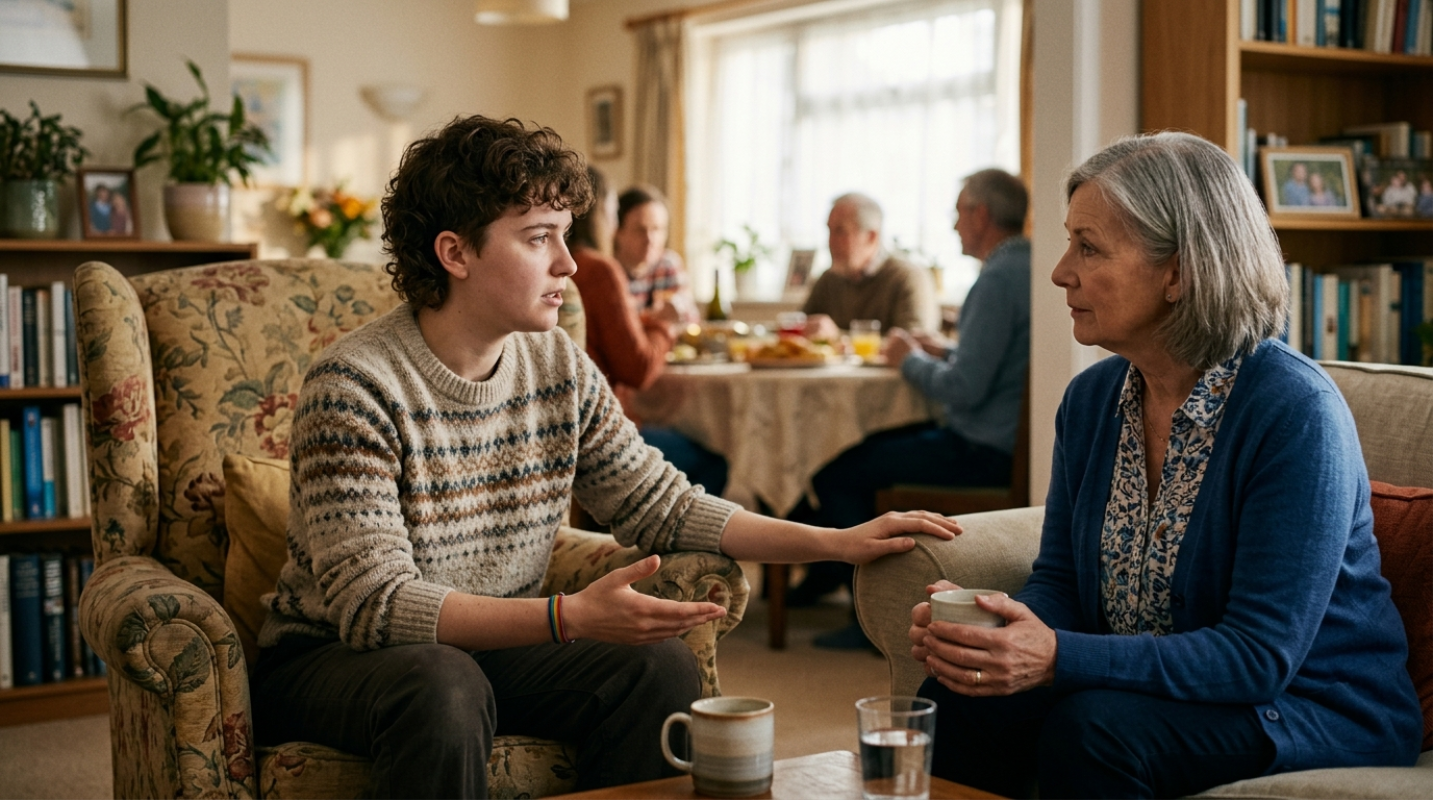
 Imagine for a second that the person who is supposed to be your ultimate safety net suddenly disappears. It's not just that they aren't there. It's that they have actively decided you aren't worth the effort of understanding. For many of us in the LGBTQ+ community, this isn't a hypothetical horror story. It's a Tuesday. Family rejection is a specific kind of grief that doesn't have a funeral. There are no casseroles or sympathy cards. There's just a quiet, heavy silence that follows you into your adulthood. It's the weight of knowing that your existence was a dealbreaker for the people who gave you life. If you've been there, I want you to know that your struggle is valid. More importantly, I want you to know that your healing is possible.
Early Trauma Shapes the Adult Psyche
When a parent rejects a child, it's a physiological catastrophe. Our brains are hardwired from birth to seek safety in our caregivers. When that safety is replaced by judgment or abandonment, your nervous system goes into a permanent state of red alert. You're always waiting for the other shoe to drop because, in your early life, it always did. This leads us to something called Minority Stress Theory. It's the idea that being part of a marginalized group adds a layer of chronic stress that other people just don't have to carry. When that stress starts inside your own house, you never get a chance to build a baseline of peace. You're living in a war zone before you even know what war is.
This early trauma often shows up later as complex attachment styles. You might find yourself being "anxiously attached," where you're constantly worried your partner will leave you. Or maybe you're "avoidant," pushing people away before they can get close enough to hurt you. It's a defense mechanism that served you well as a kid, but it's probably making your adult relationships a lot harder than they need to be. Here are some other symptoms that might show up in adulthood after childhood trauma:
- People-pleasing tendencies: overextending yourself to avoid rejection or conflict
- Emotional flashbacks: intense reactions to minor situations that feel disproportionate but rooted in past experiences
- Difficulty trusting others: assuming people will eventually disappoint, betray, or abandon you
- Fear of vulnerability: struggling to open up, even when you want closeness
- Chronic self-doubt: second-guessing your worth, decisions, or how others perceive you
- Over-apologizing: saying sorry for things that don’t require it as a way to keep the peace
- Sensitivity to rejection (real or perceived): small slights feel deeply personal or catastrophic
- Control issues: needing to manage outcomes or people to feel safe
The Long-Term Mental Health Toll Beyond the Initial Hurt
The data on this is pretty sobering, but we need to look at it to understand the scale of what we're dealing with. Recent reports from early 2025 show that nearly half of LGBTQ+ young adults are estranged from at least one family member. That's a massive portion of our community living with a "rupture of attachment" that doesn't just go away when you turn thirty.
If you grew up with high levels of family rejection, you're statistically much more likely to deal with heavy stuff. We're talking 8.4 times more likely to attempt suicide and nearly 6 times more likely to report high levels of depression. Have you ever felt like you're finally doing okay, and then suddenly you're hit with a wave of sadness that feels like it belongs to a ten-year-old? That's often delayed grief. Many LGBTQ+ adults hit their 30s or 40s and realize they never actually processed the loss of their family. They were too busy surviving.
This stress doesn't just stay in your head, either. It lives in your tissues. Chronic rejection leads to high levels of cortisol, which causes inflammation throughout the body. This is why many of us deal with chronic pain, autoimmune issues, or digestive problems. Your body is literally keeping the score of the rejection you endured decades ago.
Clinical and Emotional Relief
So, where do we go from here? The fire to people who refuse to respect you. Create a "Family of Choice." Next, look for some assistance from mental health professionals. Clinical wellness today isn't the same as it was ages ago. Since the trauma is stored in your nervous system, you have to work with your body to release it. Approaches like EMDR (Eye Movement Desensitization and Reprocessing) are huge for this. It helps you take those "rupture moments" and turn them into memories that no longer have a physical "sting."
Another great tool is Internal Family Systems, or "parts work." This involves identifying the part of you that still feels like a rejected teenager and giving that part the love it never got. You're becoming the parent you needed. It sounds a bit "woo-woo" until you try it and realize how much of your daily anxiety comes from that one hurt part of you.
Seeking out affirming therapy is non-negotiable. You need someone who understands that your identity isn't the problem, but the world's reaction to it is. Community-based support networks are also key. Research consistently shows that social support from friends is a much stronger predictor of mental health for us than support from biological family. For those looking to deepen their healing journey or find community, here are some highly recommended paths to explore:
- Trauma-Informed Therapy: Look specifically for providers trained in EMDR or IFS who specialize in LGBTQ+ issues.
- Local LGBTQ+ Centers: These are hubs for finding chosen family and peer support groups that understand your specific cultural context.
- Somatic Experiencing Workshops: These sessions focus on releasing the physical "freeze" response that often accompanies early childhood rejection.
- Boundary Setting Coaches: Professionals who help you handle the tricky waters of "low contact" or "no contact" with toxic relatives.
This article is for informational and educational purposes only. Readers are encouraged to consult qualified professionals and verify details with official sources before making decisions. This content does not constitute professional advice.