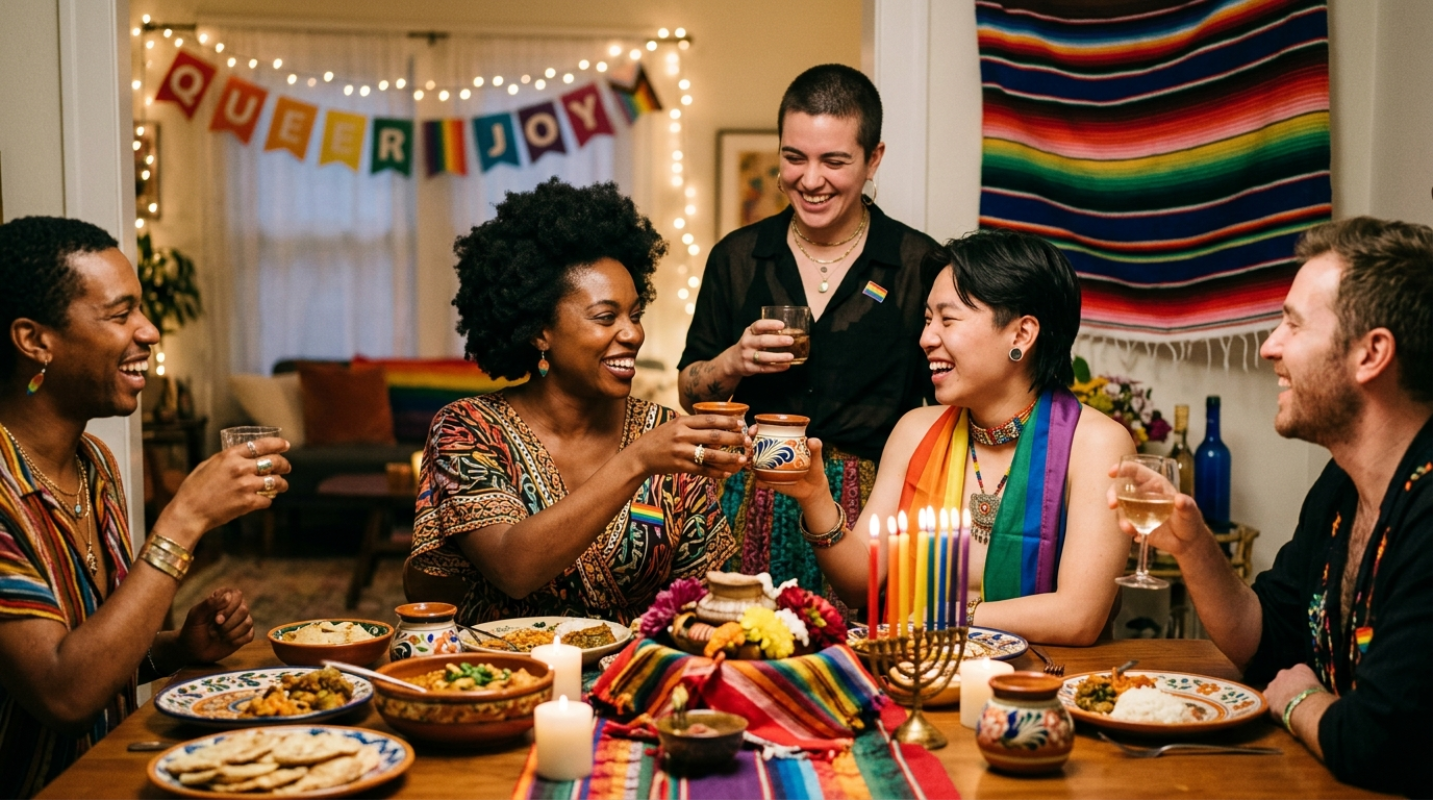
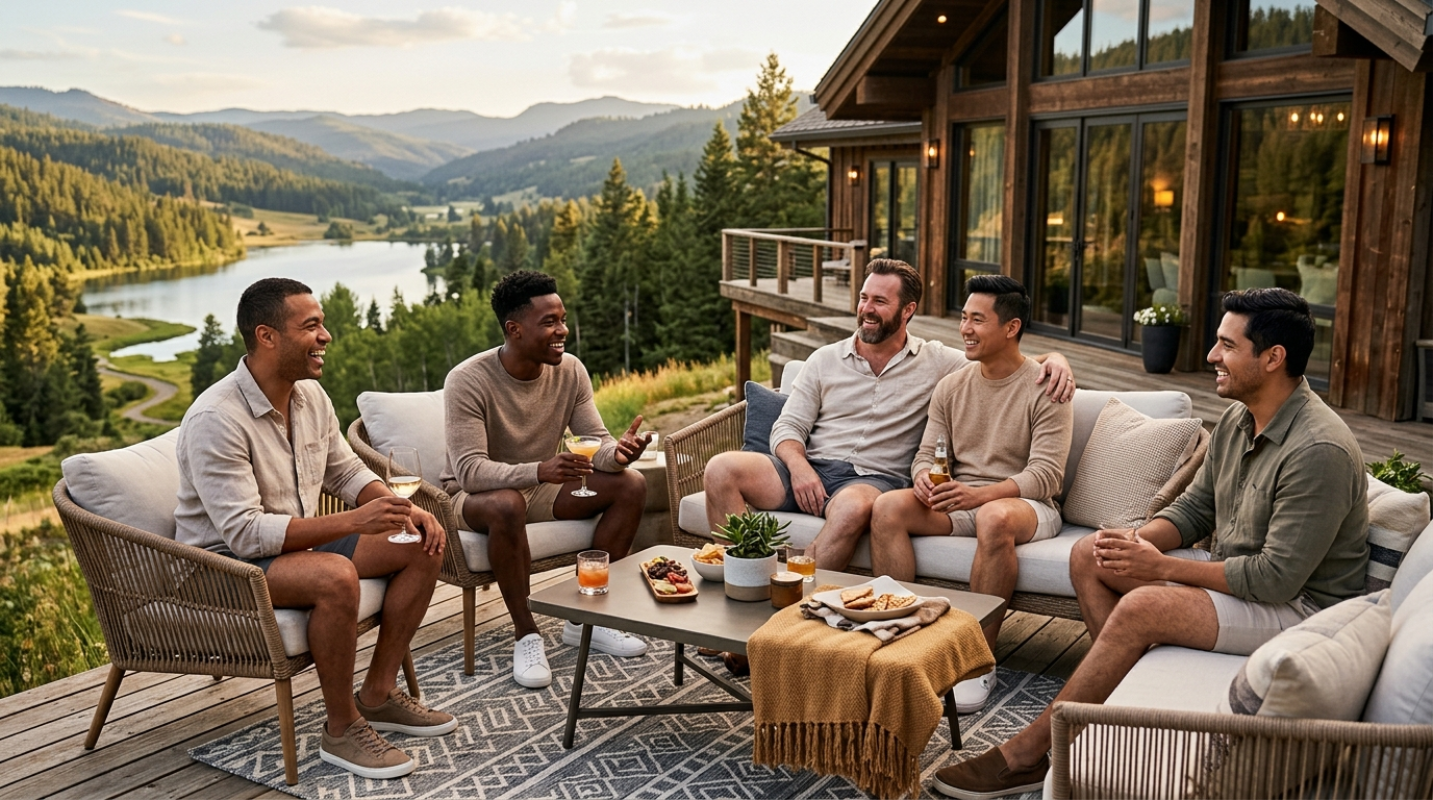
 (Image source: BAG)
 We often think of gay travel as a circuit party in Ibiza or a loud weekend in Provincetown. Although those are great for a high-energy release, they don't always leave you feeling recharged. In fact, they can sometimes leave your nervous system more fried than when you left. That is why we are seeing a massive shift toward intentional, queer-centric wellness spaces. The numbers back this up. The LGBTQ+ wellness travel market is currently worth about $357 billion. It is projected to hit $568 billion by 2030. Queer travelers outspend the general population by 23%, and more of us are putting that money toward mental health, chosen family, and nature-based therapy.
So what does this actually mean for you? It means the "gay retreat" has evolved. It is no longer just about where you can hold hands without being stared at. It is about radical self-acceptance and finding a community that understands your history without you having to explain a single word of it.
1. The Oasis of Palm Springs
Palm Springs has always been our playground, but the vibe is shifting from mid-century pool parties to deep-tissue healing. When you think of a desert retreat, think of it as a literal and metaphorical shedding of layers. Many of the high-end resorts here are clothing-optional, but the real draw is the "come-as-you-are" atmosphere that removes the pressure to perform.
In this environment, you aren't just a guest. You are part of an intentional community. You can go from a sound bath in the morning to a community mixer by the pool without ever feeling like you have to hide your identity. It is the digital equivalent of clearing your cache and starting fresh.
One of the standouts in this region is the Rio Retreat Center in Wickenburg, just a short trip from the main Palm Springs hub. They offer a "Coming Home" workshop that is less about luxury and more about clinical-grade helpment. It addresses "minority stress," which is the chronic stress we face just by existing in a world that wasn't built for us.
- Focus: Trauma-informed mental health and identity help.
- The Experience: You will use things like psychodrama and Somatic Experiencing to dismantle shame.
- Why it works: It helps you "come home" to your authentic self rather than just escaping your life for a week.
2. The Vermont Queer Wilderness Retreat
There is something about the woods that levels the playing field. When you are surrounded by ancient trees and fresh mountain air, the noise of social media and city life just fades away. In the Vermont and Upstate New York corridor, retreats are focusing on the power of the earth to heal queer trauma.
Easton Mountain is a staple for this kind of connection. They have been around for over 25 years, focusing on what they call "Heart Circles." This is a practice of deep, non-judgmental listening. Imagine sitting around a campfire with men of all ages, sharing stories of queer history and personal struggle. It creates an immediate sense of belonging that you just can't find on an app.
These retreats often feature guided forest bathing and outdoor movement. Research shows that spending just 120 minutes a week in nature significantly improves your mental health. For trans and non-binary guests, this kind of nature therapy is a form of gender-affirming self-care that feels both quiet and revolutionary.
The intergenerational aspect is the secret sauce here. You might find yourself hiking with someone who lived through the Stonewall era or meditating with a Gen Z activist. That sharing of history matters for our collective resilience. It reminds us that we are part of a long, beautiful lineage.
3. Mykonos Wellness and Complete Healing
Mykonos has a reputation for being the party capital of the Mediterranean, but there is a quieter side emerging. Industry experts like Jenny Southan have noted that "Queer Wellness" is a top trend for 2026. Travelers are moving away from party-centric destinations toward transformative experiences that offer a "return to self."
If you want a global perspective, you might look at places like The Place in Bali or the complete villas in the Greek Isles. These spots blend high-energy socialization with structured yoga and breathwork. The Mediterranean-focused nutrition isn't just about looking good in a swimsuit. It is about fueling your body with intention.
Being in a "queer-first" travel environment removes the travel anxiety that often comes with international trips. You don't have to wonder if the hotel staff will be weird about your partner or if you are safe in the local neighborhood. That safety allows your nervous system to finally drop into a state of rest.
At a place like The Place Retreats, the focus is on bespoke psychotherapy. Founded by Jean-Claude Chalmet, it is where clinical care meets Eastern modalities. Every guest gets a customized program. You might have a one-on-one therapy session in the morning and Kundalini yoga in the afternoon. It is about connecting your heart and your mind in a way that feels sustainable.
4. Cabin Retreats in the Pacific Northwest
Not every retreat needs to be a group activity. Sometimes, the most "queer" thing you can do is take up space all by yourself. The "Queer Solo Retreat" is a growing concept for creators, writers, and anyone processing a major life transition like a breakup or a career change.
The Pacific Northwest and the Hudson Valley are hotspots for queer-owned, inclusive properties that offer deep privacy. Think of a secluded cabin where the only thing on your schedule is staring at the mist over the trees. This kind of intentional solitude is powerful for those of us who spend our lives catering to the needs and expectations of others.
Finding a queer-owned property matters here. It make sures that your "safe space" is actually safe. You aren't just a customer. You are a guest in a home that understands your lived experience. This allows for a level of introspection that is hard to achieve when you are worried about the person checking you in.
These solo retreats are about nervous system regulation. When you are alone in a supportive environment, you can finally hear your own voice. For many queer people, that voice has been drowned out by the need to survive or fit in. Giving yourself the gift of silence is an act of extreme self-love.
This article is for informational and educational purposes only. Readers are encouraged to consult qualified professionals and verify details with official sources before making decisions. This content does not constitute professional advice.