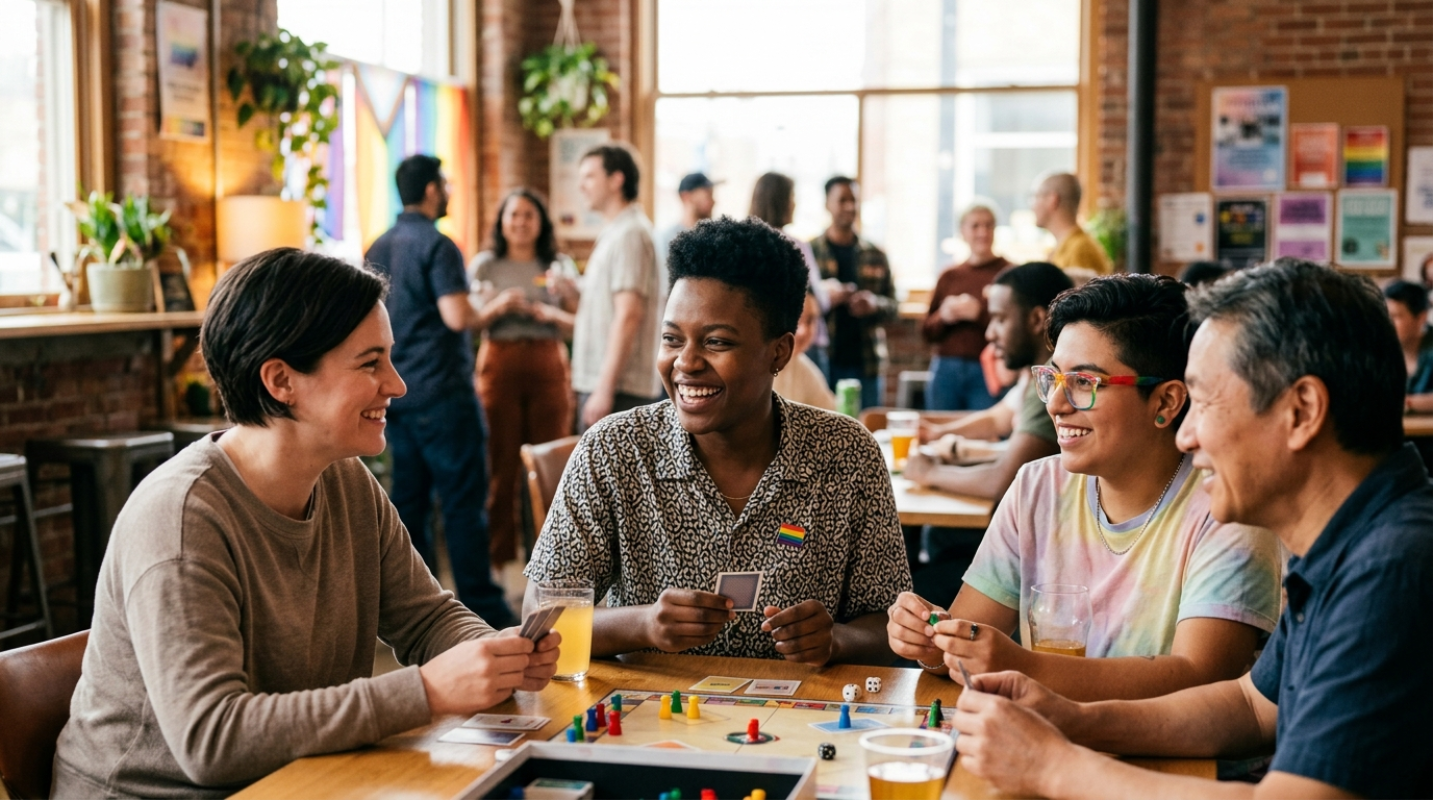
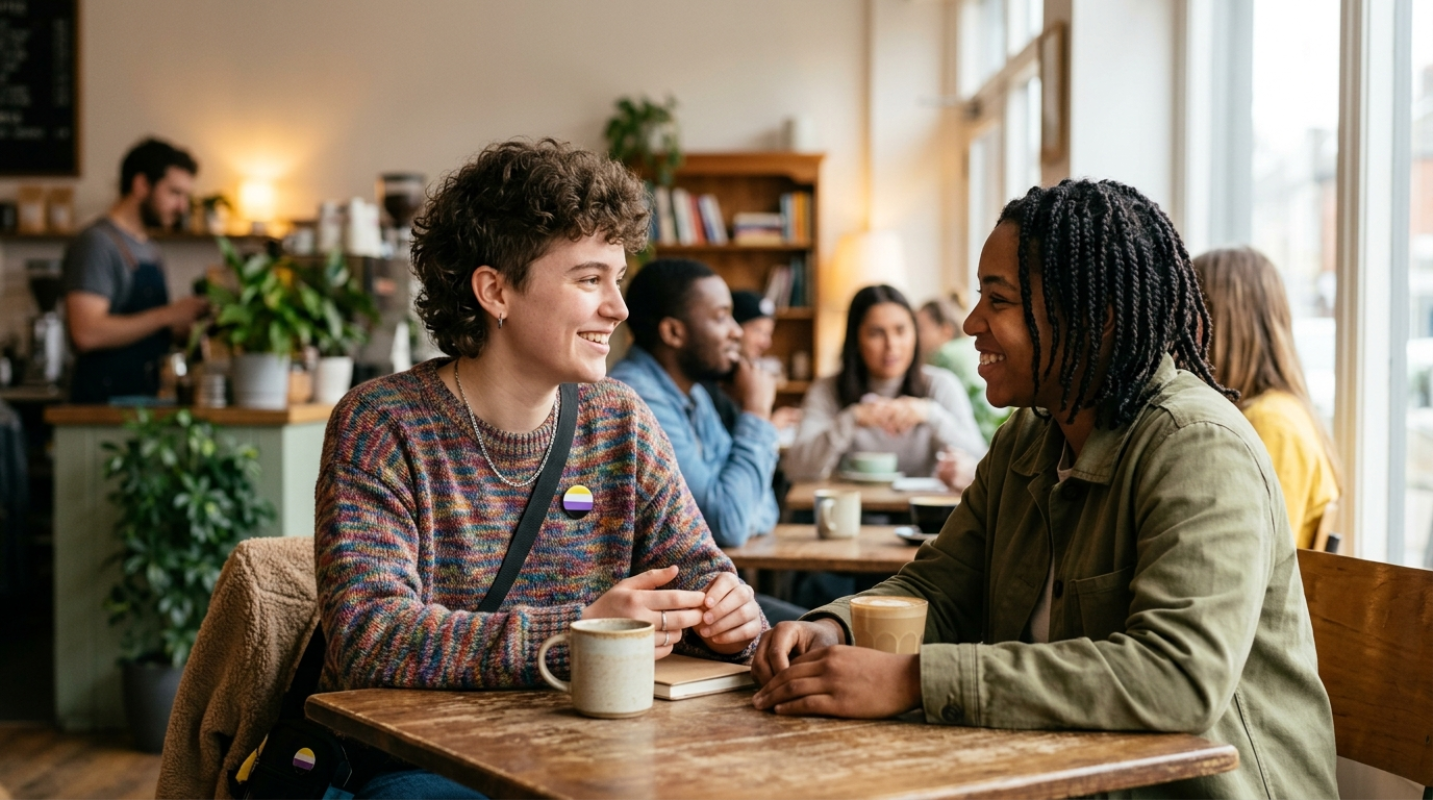
 (Image source: BAG)
 Long-distance relationships (LDRs) are a staple of the LGBTQ+ experience for a reason. Our dating pools can be small, especially if you live outside a major city. Sometimes we meet through niche community discords, gaming lobbies, or activist circles. We find our people where we can, even if "where" is a thousand miles away. Let's talk about what it takes to really succeed at a long-distance relationship for someone who's in the LGBTQ+ community. Like all relationships, it takes a bit more work, but with a little effort and determination, it's possible.
Queer Long Distance is Different
Being queer and long-distance adds layers of complexity that heteronormative advice columns often miss. It isn't just about the physical gap. It’s about the fact that many of us are already used to "safety migration."
In 2025, a Kinsey Institute survey found that 1 in 4 LGBTQ+ singles were rethinking where and how they date because of the political climate. About 21% of queer Gen Z folks reported moving to more affirming areas, which often meant leaving a partner behind or starting a relationship with someone in a safer "hub" city. We move for safety, for healthcare, and for community, and our hearts often have to play catch-up.
This creates a unique kind of resilience. We’re already experts at building "chosen family" and maintaining connections across distances. We’ve been doing it for decades through zines, pen pals, and now, complex digital ecosystems.
Building Digital Intimacy Beyond Texting
If your relationship consists entirely of "good morning" and "how was your day" texts, you're going to burn out. Digital intimacy needs to be deeper than a status update. You need to create a sense of "co-presence," which is the feeling of actually being in each other’s lives without being in the same room.
Successful couples are moving toward "passive connection" apps. You might use Locket or Noteit to send little drawings or photos directly to each other’s home screens. It’s a low-pressure way to say "I’m thinking of you" without demanding a full conversation.
There is also a psychological trick called "Partner Reflective Functioning" or Partner RF. A 2025 study in the journal Personal Relationships found that this is the biggest predictor of LDR success. It’s basically the ability to mentally step into your partner’s shoes and understand their emotional state without them having to spell it out. Since you can’t see their body language, you have to become an expert in their "digital tone."
Safety and Queer-Specific Logistics
Travel isn't just about booking a flight when you're queer. It’s a logistical puzzle involving safety, visibility, and sometimes, legal protection. This is especially true for our trans and non-binary siblings.
In 2025, statistics showed that 57% of LGBTQ+ people made major life decisions, like where to travel or work, based on anti-LGBTQ+ laws. If you're visiting a partner in a hostile region, you have to have "the talk" about safety. Will you hold hands in public? Are you "roommates" to the Airbnb host?
This is where the "queer safety net" comes in. Before a visit, successful couples often check in with local queer networks or use apps like Lex to find safe spaces in the destination city. You aren't just visiting a person. You're navigating a space that might not be built for you.
Healthcare is another massive factor. Transgender individuals in LDRs often face hurdles when trying to access gender-affirming care across state lines or international borders. Planning a visit often means packing months of prescriptions and knowing where the nearest affirming clinic is, just in case.
If you are looking for ways to bridge the gap and keep the spark alive, these tools and approaches are currently leading the way for queer couples.
- Voda App:, A queer-led mental health app that offers guided programs specifically for LGBTQ+ relationship anxiety and minority stress. It’s a great way to process the unique hurdles of a queer LDR together.
- Cupla: This shared calendar app is a lifesaver for the 14 million Americans in LDRs. It automatically handles time zone conversions and helps you schedule "digital dates" so you aren't constantly doing time-zone math in your head.
- The LAT Model: Living Apart Together isn't an app, but a relationship structure. More queer couples are choosing to maintain separate homes even when they could move in together, prioritizing autonomy and personal space.
- Lex: Although known as a social app, it’s become a key tool for LDR partners to find "community hubs" and safe events when visiting a partner’s city for the first time.
Expectations and Future-Proofing
One of the hardest things to hear is that 37% of long-distance relationships end within three months of a permanent reunion. This is often called "Relationship Jet Lag." You spend months or years romanticizing the "someday," and when that day finally arrives, the mundane reality of sharing a bathroom can be a shock.
To avoid this, you have to stop treating the distance as a "waiting room" for your real life. Your life is happening right now. If you're only happy when you're together, the relationship will eventually feel like a burden.
The "End Date" conversation is mandatory. It doesn't have to be next month, or even next year. But you need a timeline for "closing the gap." An LDR without an eventual plan to be in the same place is just a very intense hobby.
Experts from the Conscious Girlfriend Academy suggest having honest, even uncomfortable, discussions about sexual boundaries. Some queer couples find success with "monogamish" arrangements during the distance to prevent resentment. Others find that strict monogamy provides the security they need. There is no "right" way, only the way that works for you.
Community Although Apart
It’s easy to let your partner become your entire world when they're the only person who truly "gets" you. But isolating yourself from your local queer community is a recipe for disaster. If your partner is your only source of queer connection, you're putting way too much pressure on the relationship.
You need a local "chosen family" who can hold you when your partner can't. You need people you can go to a drag show with or grab coffee with on a Tuesday night. This actually makes your relationship stronger because it means you aren't coming to your partner with a "starvation" mindset.
Try to integrate your partner into your local circle virtually. Introduce them to your friends over a Discord hangout. Let them see your world, even if it’s through a screen. This helps the relationship feel "real" to the people around you, which builds a support system for both of you.
Don't lose your individual identity in the "we." Long-distance gives you a unique opportunity to build a very solid "me" while you're working on the "us." Take that pottery class. Go to that protest. Build a life you love where you are, so that when you finally do merge your lives, you're bringing a whole person to the table.
This article is for informational and educational purposes only. Readers are encouraged to consult qualified professionals and verify details with official sources before making decisions. This content does not constitute professional advice.