 (Image source: BAG)
 Holidays are special markers in time that allow people to pause and reflect on their history and identity. Queer holidays offer a unique chance for the LGBTQ+ community to blend modern pride with deep-rooted cultural traditions. These celebrations honor the ancestors who fought for freedom and create new holidays for the next generation. People all over the world are finding creative ways to weave their specific ethnic and cultural backgrounds into queer-specific dates. This fusion of old and new creates a powerful sense of "belonging," which is the feeling of being accepted and supported by your community. Celebrating these holidays helps turn the calendar into a map of resilience and joy.
Pride Month and the Spirit of Resistance
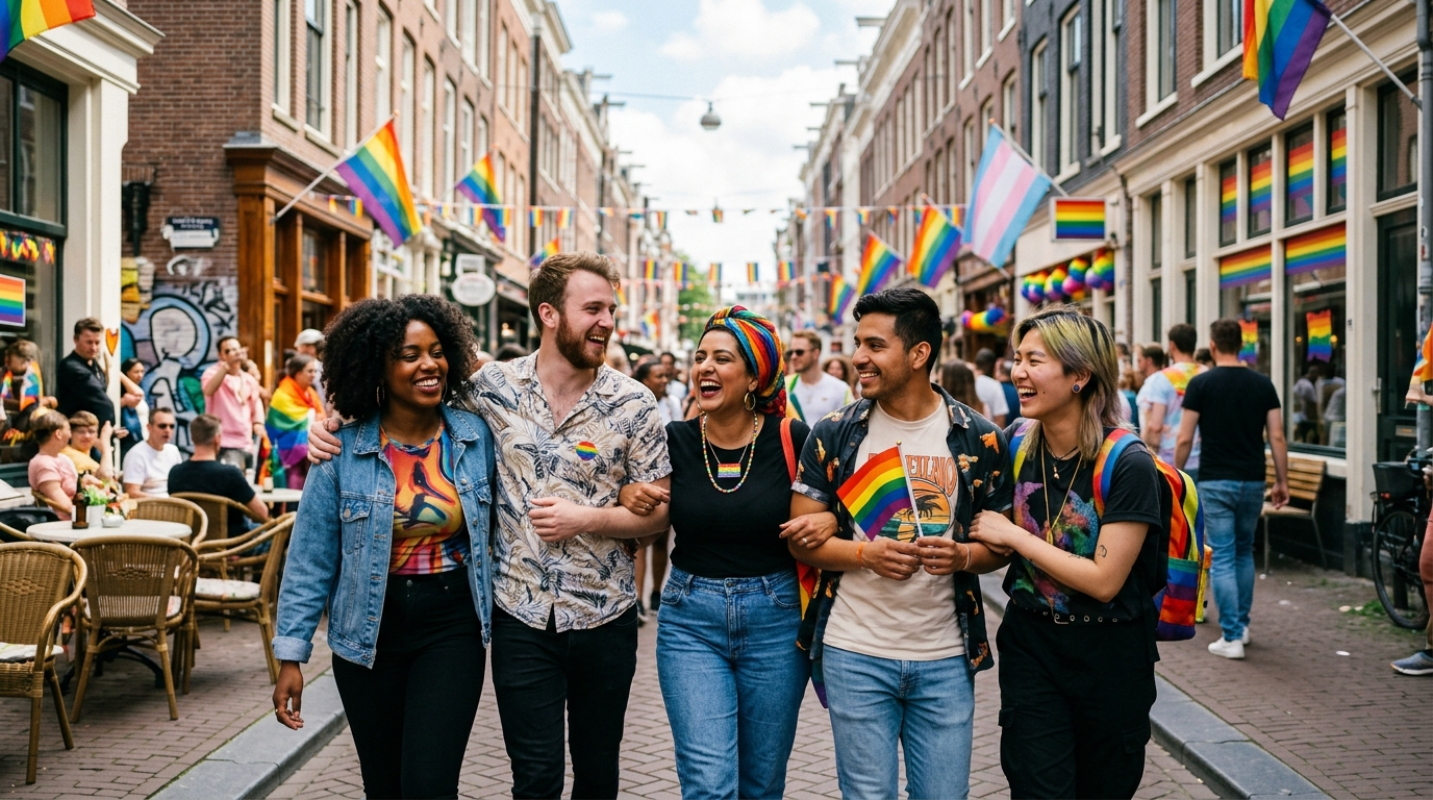
June is recognized globally as Pride Month to commemorate the 1969 Stonewall Uprising in New York City. This month is a "cornerstone" of queer culture, meaning it is the most important foundation for all other celebrations. While many people think of rainbows and glitter, many cultures use this time to honor their specific "lineage." Lineage refers to the direct line of ancestors that came before you. In many Black and Brown communities, Pride Month is a time to celebrate "house culture" and ballroom scenes. These traditions started in the 1970s as a way for queer people of color to create their own pageants and families when they were excluded from mainstream events.
Ballroom culture involves "categories" where people compete in dance and fashion. This tradition has its own language, using terms like "mother" and "father" to describe the leaders of a house. These are not biological parents, but "chosen family" members who provide guidance and safety. During June, many cities host balls that serve as cultural holidays. These events are "intersectional," which is a word used to describe how different parts of a person's identity, like their race and their sexuality, work together. Celebrating Pride through the lens of ballroom culture keeps the history of Black and Latinx resistance alive for a high schooler today.
Transgender Day of Visibility and Cultural Resilience
March 31st marks Transgender Day of Visibility (TDOV), a day dedicated to celebrating the accomplishments of trans and non-binary people. Unlike other days that focus on tragedy, this holiday is all about "empowerment." Empowerment is the process of becoming stronger and more confident in controlling your life. Many Indigenous cultures use this day to honor "Two-Spirit" traditions. Two-Spirit is a modern term used by some Indigenous North Americans to describe a third gender that has both masculine and feminine spirits.
In these communities, TDOV might be celebrated with a "Talking Circle." This is a traditional way of communicating where people sit in a circle and pass an object, like a feather or a stone, to take turns speaking. Only the person holding the object speaks, ensuring that everyone is heard with "intentionality." Intentionality means doing something with a clear and thoughtful purpose. By combining a modern trans holiday with an ancient Indigenous practice, the community reinforces the idea that trans people have always been a respected part of human history.
Dia de los Muertos and Queer Altars
Dia de los Muertos, or Day of the Dead, is a Mexican holiday celebrated in early November to remember friends and family members who have passed away. In recent years, queer people have started creating "Ofrendas," which are altars decorated with photos, flowers, and the favorite foods of the deceased. These altars often feature "Papel Picado," which is traditional decorative paper with intricate cut-out designs. A queer ofrenda might include photos of famous activists like Marsha P. Johnson or local community members who were lost to the HIV/AIDS epidemic.
The act of building an altar is a "ritual." A ritual is a sequence of activities involving gestures, words, and objects performed in a sequestered place. For many LGBTQ+ people, this holiday provides a space to mourn those who were not given proper funerals by their biological families. Marigold flowers, known as "Cempasúchil," are placed on the altar because their bright color and strong scent are believed to guide spirits back to the world of the living. This tradition allows queer people to maintain a "spiritual connection" with their history, proving that love and memory do not end when a person dies.
Spirit Day and the Power of Purple
Spirit Day happens on the third Thursday of October, and it is a holiday dedicated to speaking out against bullying. Millions of people wear purple to show support for LGBTQ+ youth. The color purple was chosen because it represents "spirit" on the original rainbow pride flag. This holiday is widely celebrated in schools and workplaces as a way to promote "inclusivity." Inclusivity is the practice of providing equal access to opportunities and resources for people who might otherwise be excluded or marginalized.
Many communities take this tradition a step further by hosting "Storytelling Slams." These are events where people get on stage to share personal stories about overcoming challenges. In many cultures, oral tradition—passing down history through spoken word—is the most important way to keep a community strong. By sharing stories while wearing purple, people turn a simple fashion choice into a "social movement." This holiday teaches high school students that standing up for others is a tradition worth keeping every single year.
Transgender Day of Remembrance and Ancestral Honor
November 20th is the Transgender Day of Remembrance (TDOR), a solemn holiday that honors the memory of trans people whose lives were lost to violence. While this is a sad day, many cultures incorporate "vigils" to bring light to the darkness. A vigil is a period of keeping awake during the time usually spent asleep, especially to keep watch or pray. In some Asian and Pacific Islander communities, this might involve a "Lantern Release" or a "Floating Flower Ceremony."
Participants write the names of lost loved ones on lanterns or flowers and release them into the air or water. This symbolizes "liberation," or the act of setting someone free from imprisonment or oppression. The light from the lanterns represents the "eternal flame" of the person’s spirit. This tradition helps the community process "collective grief," which is the heavy feeling of sadness shared by a whole group of people. Turning a day of mourning into a beautiful cultural ceremony helps the community heal and find the strength to keep fighting for safety.
Lunar New Year and Queer "Red Envelopes"
Lunar New Year is one of the most important holidays in many East Asian cultures. Traditionally, elders give "Hongbao" or "Red Envelopes" filled with money to younger people to wish them luck. Many queer Asian groups have started their own "Queer Lunar New Year" celebrations. They use the red envelope tradition to support "Mutual Aid" funds. Mutual aid is a system where community members take care of each other by sharing resources like money, food, or housing.
Instead of just giving money to family members, these groups might pool their red envelopes to help a local queer youth center or a trans person who needs medical care. This transforms a traditional "luck" ritual into a modern "solidarity" ritual. Solidarity is a feeling of unity between people who have the same interests or goals. These celebrations often feature "Lion Dances," where performers dress in a large lion costume to scare away evil spirits. A queer version of this dance might involve a "Rainbow Lion," blending ancient folklore with modern pride.
Bisexual Plus (Bi+) Awareness Week
September contains Bi+ Awareness Week, culminating in Celebrate Bisexuality Day on September 23rd. This holiday focuses on "visibility" for people who are attracted to more than one gender. Since bisexual people often face "erasure," this week is about loud and proud celebration. Many communities host "Potlucks," which are communal meals where everyone brings a dish to share.
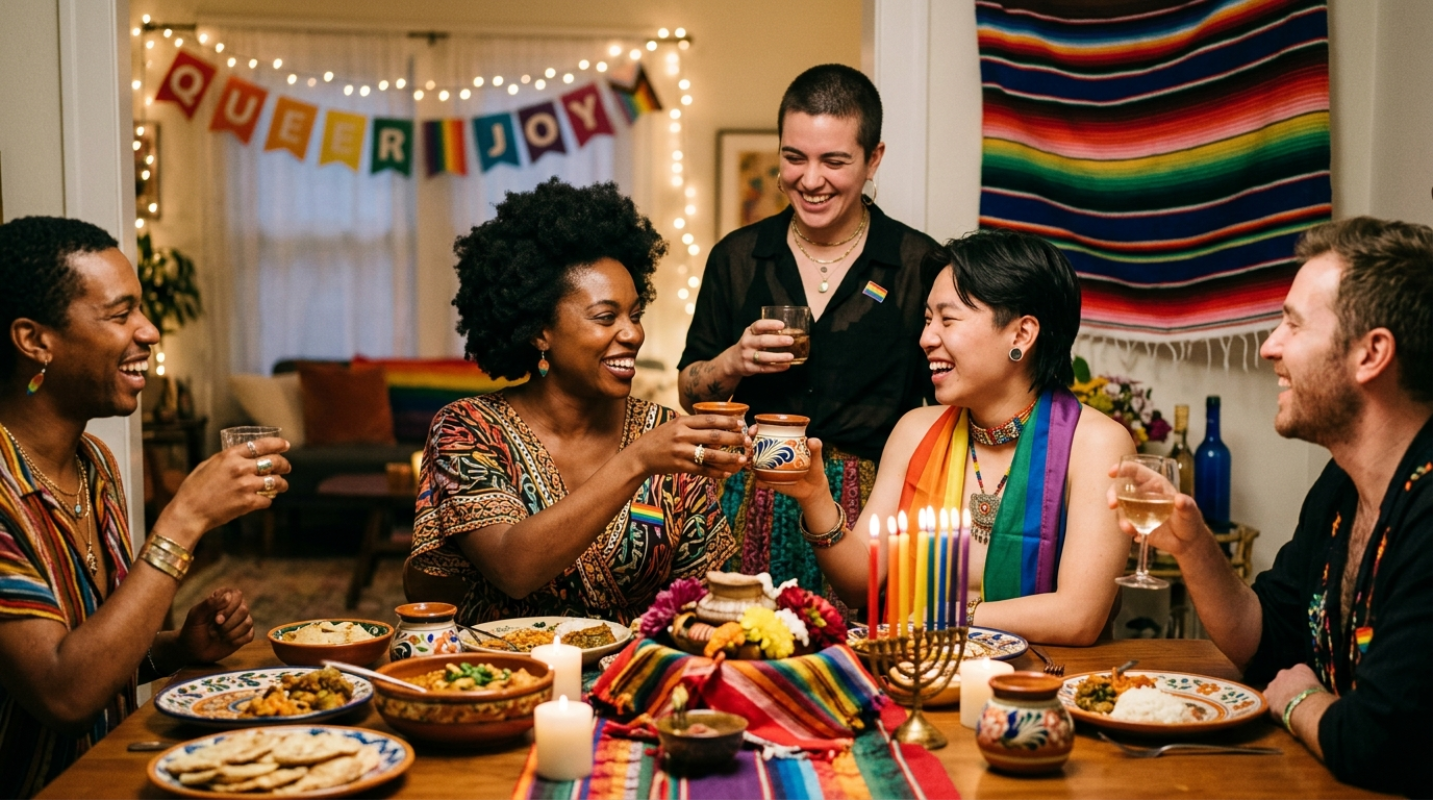
Food is a universal cultural language. A Bi+ potluck might feature dishes from many different backgrounds, representing the "diversity" of the community. Diversity is the range of human differences, including different heritages, beliefs, and identities. Sharing a meal is a traditional way of building "community bonds." When people sit down to eat together, they are more likely to talk, share experiences, and realize they are not alone. This holiday proves that being part of a group is one of the most important cultural traditions of all.