 (Image source: BAG)
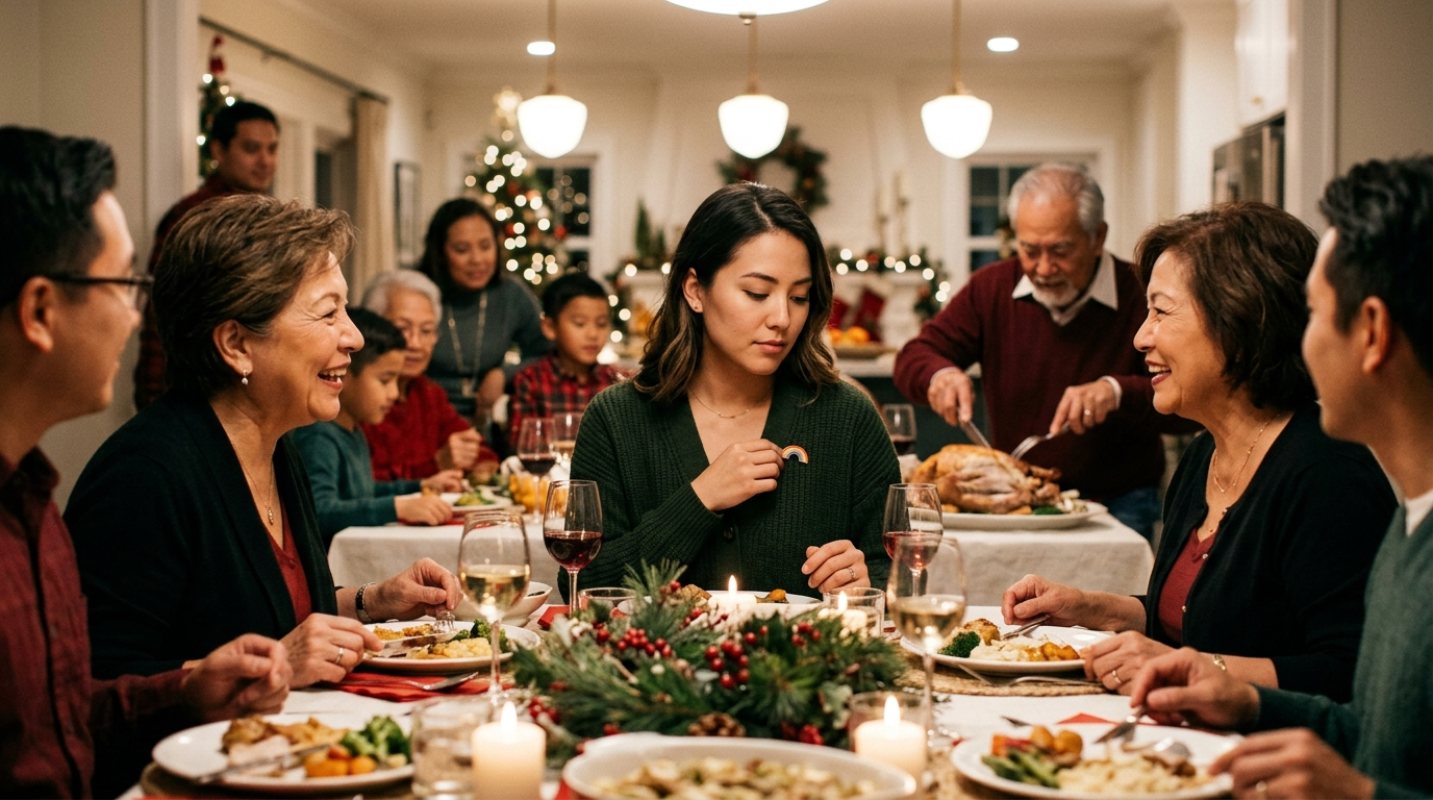
 The holiday season usually arrives with a heavy side of performance art. It's that moment you pull into the driveway of your childhood home and feel your posture change. Maybe your voice gets a little higher, or you subconsciously tuck away the parts of yourself that don't fit into the old family photo albums. Anything to get along with relatives that don't accept who you are. We're often expected to play a role that fits a traditional narrative, one that doesn't always have room for our partners, our pronouns, or our authentic lives. This year, let's change the goal. Instead of focusing on making sure everyone else is comfortable, we're going to prioritize your mental wellness. Let's discuss why we're making this change.
Holiday Expectations and the Mask We Wear
Families love a good narrative. They cling to traditions because those rituals provide a sense of stability, even if that stability is built on a foundation of "don't ask, don't tell." When you show up as your full, authentic self, it sometimes disrupts that old script. This is where the tension starts. Your family might not be trying to be malicious, but they're often more invested in the version of you that they've created in their heads than the person standing in front of them.
The emotional toll of this is what experts call minority stress. It's the chronic weight of being part of a stigmatized group, and it gets amplified when you're in a space where you feel you have to "tone it down" to keep the peace. Data from just a couple of years ago showed that 64% of people with mental health conditions found the holidays made their symptoms worse, and for our community, that's often tied directly to identity concealment.
So what's the difference between a healthy compromise and a total sacrifice of your selfhood? A healthy compromise might be agreeing to go to a specific dinner even if you'd rather stay in. A sacrifice is when you're asked to leave your partner at home or use a name that isn't yours just to avoid "making a scene." One is about logistics, the other is about your fundamental right to exist.
Setting Boundaries as an Act of Self-Care
Boundaries aren't meant to be walls that shut people out. Think of them more like gates that protect your inner garden. If you don't have a gate, anyone can wander in and trample the flowers. Setting these boundaries before you even step through the front door matters. It's much easier to state your needs when you aren't already three glasses of eggnog deep and listening to a relative's unsolicited opinion on politics.
If you're worried about specific interactions, try a "heads up" message. You could send a text a week before saying that you're looking forward to seeing everyone, but you want to remind them that you go by a certain name and pronouns now. Mentioning that it would mean a lot if they'd use them sets the tone. It moves the conversation from a potential conflict to a request for respect.
When you're actually at the event, you'll need some "neutral pivots" for when things get uncomfortable. If a relative starts digging into your personal life or questioning your identity, you don't have to engage in a debate. You aren't a walking encyclopedia for queer issues. You can simply say that you aren't open to debating your rights today and would rather focus on the meal. If they keep pushing, that's your cue to use your exit approach.
- The Exit Approach: Always have a way out that doesn't depend on someone else. If you're staying at a hotel or have a rideshare app ready, you have the power to leave when you've reached your limit.
- The Redirect: When someone asks an invasive question, acknowledge the question and then immediately ask about something they love. "I appreciate you're curious about my partner, but I'd love to hear more about your new job instead."
- The Non-Negotiables: Decide ahead of time what you will not tolerate. If deadnaming is a hard line for you, decide what happens if it occurs. Maybe you take a walk, or maybe you head home early. Having a plan takes the panic out of the moment.
Your Chosen Family and Support Systems
One of the most beautiful parts of being LGBTQ+ is the concept of chosen family. These are the people who see you, validate you, and don't require a "performance" for you to be loved. If you're spending the holidays with a biological family who struggle to support you, your chosen family becomes your lifeline. They're the digital anchors that keep you grounded when the physical environment feels heavy. These are some ways you could feel supported before, during, or after the Holidays:
- Stay active in your group chats: Lean on your people in real time by sending that “help me” text when a conversation goes off the rails.
- Use quick validation as a reset: A supportive response from someone who gets you can shift you from spiraling to grounded.
- Create your own traditions: Choose “Queermas” or “Friendsgiving” over stressful family gatherings when it feels right.
- Recognize the cultural shift: With more Gen Z identifying as LGBTQ+, chosen-family holidays are becoming the norm.
- Plan for emotional after-care: Treat holiday gatherings like something you need to recover from rather than just "get through."
- Schedule a decompression day: Block off time after family events to unwind with people you feel safe around.
- Do things that actually comfort you: Watch something affirming, eat food you enjoy, and exist in a space where you can relax.
- Talk it out: Processing awkward or hurtful moments with trusted people helps release built-up stress.
- Don’t let stress linger in your body: Being intentional about recovery prevents emotional exhaustion from piling up.
When you're in the thick of a tense family dinner, your nervous system can go into overdrive. You might feel your heart racing or your jaw clenching. This is where grounding techniques come in handy.
Maintaining your own routines while traveling is also important. If you usually meditate for ten minutes or go for a morning run, don't skip it just because you're in your childhood bedroom. Those small acts of self-care are signals to yourself that your needs still matter, even in an environment that might suggest otherwise. They're tiny anchors of autonomy in a sea of family expectations.
What If You're Alone?
Not having a support system can make all of this feel ten times heavier. When you don’t have people to text, decompress with, or validate your experience, you’re often left holding everything on your own, and that can reinforce the same isolation you may have felt growing up. If you feel like you don't have people to rely on, you become your own first responder. Try these ways to get in touch with yourself:
- Limit exposure when you can: Shorten visits, step outside for breaks, or give yourself permission to leave early.
- Create a private “release valve”: Journal, record voice notes, or even type out texts you never send just to get it out.
- Build low-stakes connections: Engage in online communities, forums, or spaces where you can interact without pressure.
- Find parasocial comfort (intentionally): Watch creators, shows, or podcasts that reflect your experience so you feel less alone.
- Establish post-event rituals: Have something predictable waiting for you after stressful interactions (favorite meal, show, routine).
- Practice grounding techniques in real time: Focus on your breath, your surroundings, or physical sensations to regulate your nervous system.
- Seek out affirming environments when possible: Even occasional exposure to safe spaces (events, groups, or spaces) can help counterbalance isolation.
- Remind yourself this is temporary: Your current lack of support is a circumstance, not a permanent identity or outcome.
- Consider professional support if accessible: A therapist or counselor can provide consistent validation and tools while you build connections elsewhere.
This article is for informational and educational purposes only. Readers are encouraged to consult qualified professionals and verify details with official sources before making decisions. This content does not constitute professional advice.