 (Image source: BAG)
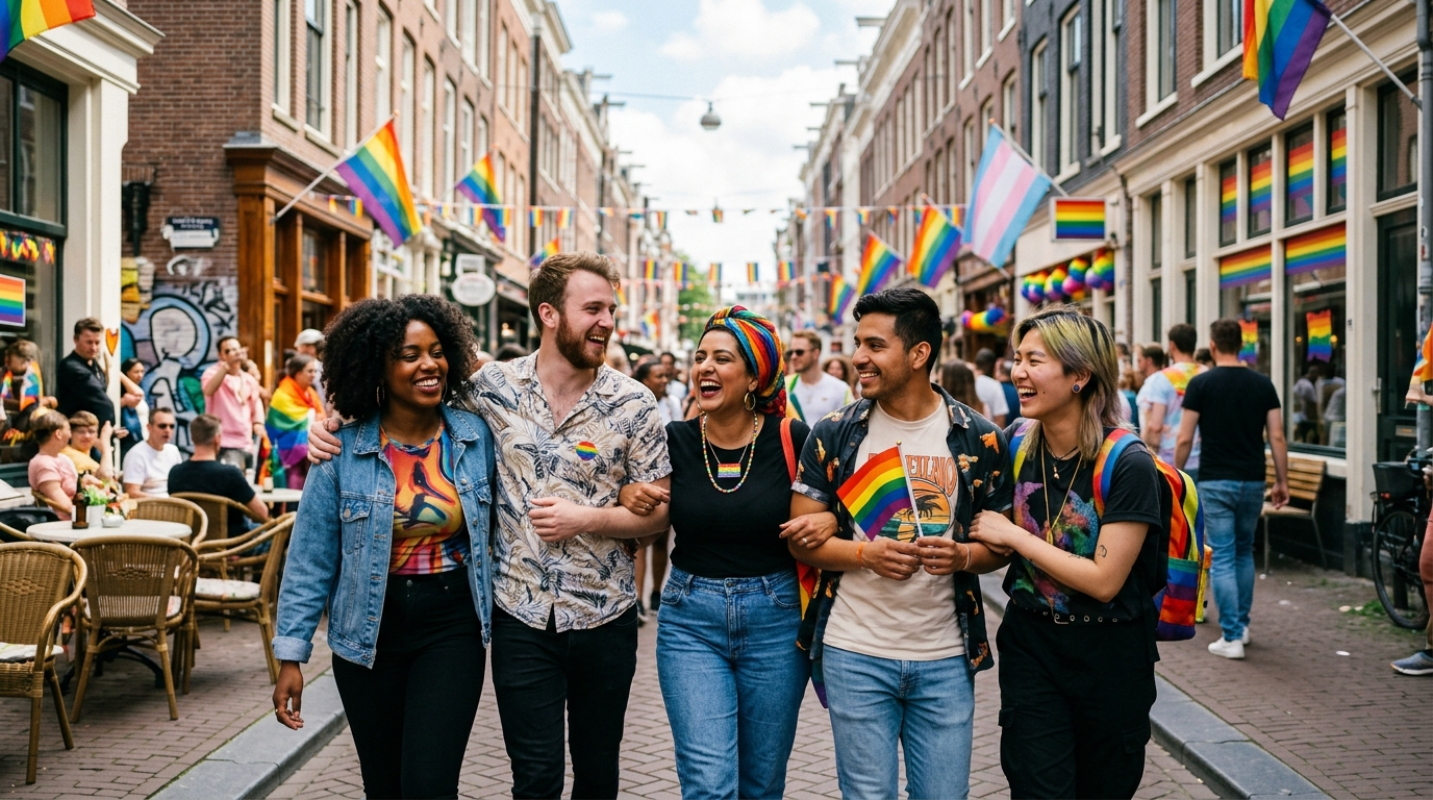
 It seems like the definition of an active community has shifted. It is no longer just about which city has the loudest circuit party or the most glitter per square inch. Although nightlife will always be a part of our history, today's queer travelers and expats are looking for something more durable. We are looking for safety, political advocacy, and spaces that are actually owned by the people they serve. We want to know that if we build a life somewhere, the local government has our back. Whether you are looking for a place to vacation or a new place to call home, these five cities are setting the standard for what an inclusive community looks like right now.
Taipei, Taiwan
If you haven't been paying attention to East Asia lately, you might have missed the fact that Taipei has quietly become one of the most progressive hubs on the planet. By 2026, it has firmly established itself as a premier destination for safety and community, especially if you are a digital nomad or someone who values a low-stress urban environment. In fact, it was recently ranked as the top global spot for LGBTQ+ digital nomads due to its incredible balance of affordability and rights.
What is the vibe like on the ground? Think of it as a city that is both high-tech and deeply soulful. Taiwan was the first in Asia to legalize same-sex marriage back in 2019, and they didn't stop there. By 2024, they expanded adoption rights, proving that their focus on equality wasn't just a one-time PR move. With a crime index that is among the lowest in the world, you can wander through the night markets at 2 AM without the hyper-vigilance that many of us carry in other major capitals.
The heart of the community is the Red House District in Ximen. It is a historic octagonal theater complex that acts as a sort of rainbow ground zero for the city. You’ll find over 25 gay bars and shops packed into this area, but it feels more like a village square than a tourist trap. For a quieter connection to the community, you can visit GinGin LGBTQ+ Bookstore, which has been a key hub since the late nineties. It is the kind of place where you can find queer literature that you simply won't see anywhere else in the region.
Chicago, USA
The United States can feel like a bit of a rollercoaster lately for queer rights, but Chicago has remained a steady, defiant sanctuary. Although other parts of the country are grappling with legislative volatility, Chicago has doubled down on its protections. It holds a perfect 100/100 on the HRC Municipal Equality Index, and in 2025, it was named the safest U.S. city for LGBTQ+ travel.
You might know about North Halsted, or Boystown, which was the first officially recognized gay village in the country. It is still a powerhouse of culture, but the real magic is happening in neighborhoods like Andersonville. This area has become a growing hub for queer women and trans-owned businesses, offering a vibe that is a bit more laid-back and community-focused than the high-energy bars of Halsted.
If you are looking for a place to grab a drink that feels inclusive and intentional, Nobody’s Darling in Andersonville is a must-visit. It is a Black lesbian-owned cocktail bar that has earned national acclaim for its atmosphere. Then there is Jennivee’s Bakery, a trans-owned Filipina bakery that recently expanded its footprint.
Valencia, Spain
Spain consistently ties for the top spot on global equality indices, and while Madrid and Barcelona get most of the spotlight, Valencia is the city you should be watching in 2026. It is hosting the Gay Games this year, which has sparked a massive wave of investment in inclusive infrastructure. But beyond the big events, there is a deep-seated social acceptance here that is hard to match. Nearly 90 percent of the population supports LGBTQ+ equality, and you can feel that in the way the city breathes.
The Ruzafa neighborhood is the bohemian heart of the queer scene. It is filled with art galleries, indie cafes, and a sense of creative energy that isn't dictated by corporate interests. It is the kind of place where you can spend an afternoon at a stylish gay cafe like La Boba y el Gato Rancio and then wander into a local art opening where half the crowd is queer.
For a bit of history, you have to visit Café de las Horas. It is a neo-baroque spot known for its Agua de Valencia, and it has been a queer-friendly staple for years. The beauty of Valencia is that it offers a more affordable and relaxed alternative to the bigger Spanish cities without sacrificing any of the safety or community spirit. It is a city that invites you to slow down and actually enjoy the life you are living.
Copenhagen, Denmark
Copenhagen is often cited as the most livable city in the world, and for the queer community, that livability is rooted in a long history of being first. Denmark was the first country to recognize same-sex partnerships in 1989, and they have continued to lead the way by removing trans identity from mental health diagnoses nearly a decade ago. In 2026, it remains a global benchmark for what happens when a city prioritizes human-centric design and radical acceptance.
The city is sometimes called the gay village of Northern Europe because the inclusion is so baked into the culture that it doesn't always feel the need to be loud. Studiestræde is the central gay district, and it is home to Centralhjørnet, which is widely considered the oldest gay bar in the world. Walking in there feels like stepping into a living archive of our collective survival and joy.
But the community is also changing. New spaces like The Pond, a queer bookstore and café, serve as modern "safe spaces" for organizing and quiet connection. There is also Vela, which remains an important cultural hub for the lesbian community. Copenhagen is a city where the government doesn't just tolerate you, it builds the city around the idea that you belong there.
Lisbon, Portugal
Portugal has made a massive jump in global safety and rights rankings, and Lisbon is currently the center of that upward trajectory. The city is hosting EuroPride this year, which has turned the local energy up to an eleven. With over 85 percent of the population supporting the right of LGBTQ+ individuals to live freely, Lisbon has become a major hub for the international queer community.
The neighborhood of Príncipe Real is the upscale heart of the scene, full of beautiful gardens and chic boutiques. But if you want something a bit more raw and active, Bairro Alto is where the crowds spill into the narrow streets at night. It is a beautiful, chaotic mix of locals and travelers all sharing the same space.
For those looking for a place to stay that is more than just a hotel, The Late Birds Lisbon is a premier gay urban resort that has become a cornerstone of the local community. And then there is Purex Clube in Bairro Alto, an alternative queer bar that attracts one of the most diverse crowds in the city. Lisbon feels like a city on the verge of its golden age, where the history of the old world is meeting a very modern, very queer future.